
🚗 AUTOS & VEHICLES
Oil Crisis & EV Shift: April 2026's Auto Industry Transformation
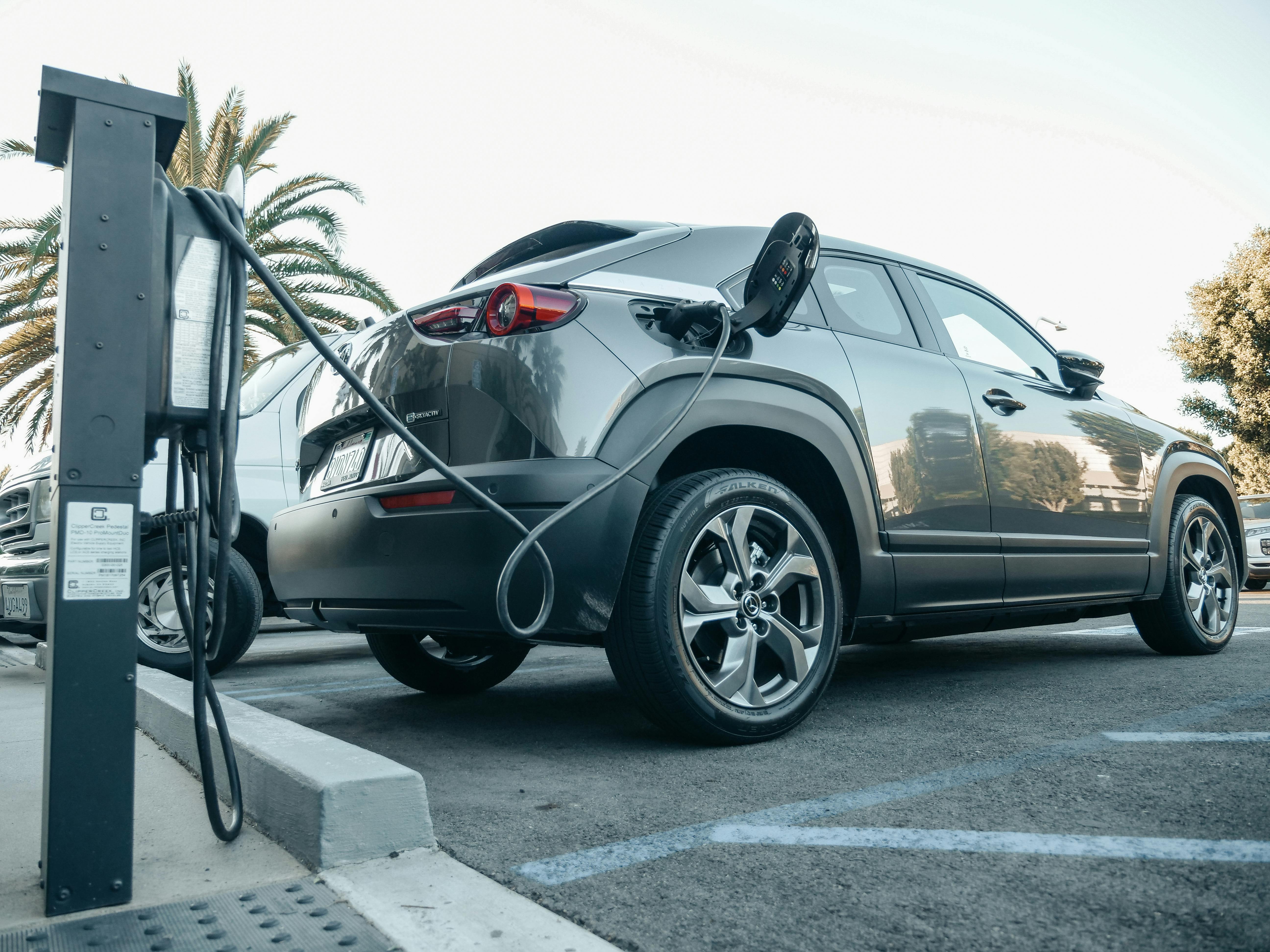
⚡ This week's top stories: Oil price surge accelerates EV demand, Chinese brands top UK sales, Kia delays SDV roadmap, Volkswagen ends US ID.4 production, and BYD's 200 OTA updates per year.
📅 April 11, 2026 ⏱ 9 min read 🔧 Barcha Automotive Desk
The second week of April 2026 has brought seismic shifts to the global automotive industry. From oil price shocks accelerating EV adoption to strategic pivots by major manufacturers, here are the top stories transforming how we drive.
1. Oil Price Surge Triggers Global EV Demand Spike
Since the outbreak of the US-Iran conflict on February 28, global energy markets have experienced dramatic turbulence. Brent crude futures have surged more than 40%, recording the largest monthly increase in history, with gasoline and diesel spot prices rising even more sharply [citation:2].
This fossil fuel price shock has dramatically increased the appeal of electric vehicles, particularly in energy-import-dependent Asian and European markets. Southeast Asian EV sales have doubled, with Thailand's monthly EV sales rising 20% and pure EV registrations surging over 240% year-over-year. Consumer EV inquiries at dealerships have increased fivefold since the conflict began [citation:2].
In the Philippines, numerous consumers have canceled fuel vehicle orders to switch to EVs, while Vietnam and Indonesia face production capacity constraints unable to keep pace with order growth. Australia saw pure EV sales rise 95.9% in February, with market share reaching 11.8% — Chinese brands leading the charge [citation:2].
📊 Key Stat: China's car exports jumped 73.7% in March to nearly 700,000 vehicles, becoming the growth engine as domestic EV demand softened and inventories remained high [citation:1].
2. China's Jaecoo 7 Becomes UK's Bestselling Model
In a historic first, the Jaecoo 7 from China's Chery became the UK's top new registration in March, marking the first time a Chinese-made vehicle has claimed the country's bestselling model position [citation:1]. Chery also overtook BYD and MG in quarterly sales, highlighting Britain's strategic gateway role for Chinese brands entering the European market [citation:1].
This milestone reflects the broader ascendancy of Chinese automotive brands globally. In Australia, Chinese brand vehicle sales reached 22,362 units in February, surpassing Japan's 21,671 for the first time to become the country's largest import source. New energy vehicle penetration rose to a record 11.8%, with BYD's popular models experiencing stockouts [citation:2].
In the Middle East, February EV imports grew over 120% year-over-year, with the UAE importing over 57,000 Chinese EVs in a single month. Israel's EV penetration rate reached 22%, with Chinese brands holding 41.4% market share and over 80% in the pure EV segment [citation:2].
3. Kia Delays SDV Roadmap, Raises Investment 30%
Kia has delayed its software-defined vehicle (SDV) roadmap by approximately one year to 2028, acknowledging the difficulty of catching Tesla and Chinese rivals in software and autonomous driving capabilities [citation:1]. The Korean automaker simultaneously raised planned investment 30% to 41.4 trillion won ($30.6 billion), while cutting its 2030 EV sales target and lifting hybrid vehicle targets [citation:1].
The strategic pivot underscores the immense pressure traditional automakers face in the transition to software-centric vehicle architectures. Kia's recalibration reflects a broader industry recognition that the path to profitable electrification may require more hybrid flexibility than previously anticipated.
4. Volkswagen Ends US ID.4 Production Amid EV Softening
Volkswagen will cease ID.4 production at its Chattanooga, Tennessee plant in mid-April, prioritizing its Atlas lineup as EV demand softens following the expiration of federal tax credits [citation:1]. Stockpiled 2026 ID.4s are expected to last into 2027, while Chattanooga shifts toward higher-volume, tariff-resilient North American products [citation:1].
This decision reflects the complex landscape facing automakers in the US market, where EV adoption has plateaued at approximately 6-7% of new vehicle sales. Despite high gasoline prices, US consumers remain price-sensitive, with the average new vehicle transaction price hovering near $48,000-$50,000 — a significant barrier for many households [citation:10].
Interestingly, Germany presents a contrasting picture: March registrations rose 16%, with battery-electric vehicles jumping 66% and overtaking gasoline models for second place behind hybrids. Yet first-quarter volumes remained well below pre-pandemic 2019 levels, underscoring a fragile recovery [citation:1].
5. BYD's Software Strategy: 200 OTA Updates Per Year
Chinese EV giant BYD is using rapid over-the-air software updates as a core competitive weapon, with 200 releases in 2025 across its key brands [citation:1]. OTA updates are extending vehicle lifecycles and reshaping post-sale value propositions, while rivals accelerate their own update strategies despite continued difficulty monetizing software features [citation:1].
This "freshness is king" approach represents a fundamental shift from traditional automotive business models, where vehicles were static products at delivery. BYD's strategy keeps vehicles current with evolving technology, potentially improving resale value and customer retention while creating new recurring revenue opportunities.
6. Tesla Shows Signs of Recovery in Europe
Tesla's first-quarter registrations rebounded strongly in Europe, particularly in Germany and France, after a weak 2025 [citation:1]. The recovery offers some support for Grünheide's role as Tesla's European hub, though global shipments rose only modestly and missed expectations, with production outpacing deliveries and creating backlog [citation:1].
However, automakers continue pushing driver-assistance subscriptions to generate recurring software revenue, even as consumers resist paying monthly for features they expect as standard. Tesla, Rivian, and Lucid are testing the model amid growing criticism over limited autonomy and reduced standard equipment [citation:1].
7. China's April New Car Launches: Experience Beyond Specs
April 2026 has seen over a dozen major model launches in China, revealing a market transitioning beyond hardware one-upmanship toward democratization of advanced technology and rethinking user experience [citation:8].
Key highlights include the 2026 XPENG MONA M03, with an entry price of just 119,800 yuan ($16,500), prioritizing full-scenario "parking space to parking space" autonomy that enables seamless navigation across both urban and highway environments. This brings advanced self-driving capabilities to the entry-level segment, dismantling the long-held equation of premium pricing with advanced autonomy [citation:8].
Volkswagen Anhui's ID. UNYX 08 adopts a pragmatic partnership model, integrating the China Electronic Architecture (CEA) co-developed with XPENG and XPENG's Turing chip to deliver 1,500 TOPS of computing power. This highlights how established global players are pivoting from closed development toward rapid adoption of China's mature local tech stacks [citation:8].
8. Supply Chain Disruptions Reshape Logistics
The Hormuz Strait blockage is forcing automakers to fundamentally rethink supply chain strategies. Hyundai is rerouting ships via the Cape of Good Hope, lengthening lead times, while raising local sourcing, maintaining higher inventories, and using greater operational flexibility to protect production amid war, tariffs, and volatile demand [citation:1].
Maersk warns that crises such as the Iran war are making disruption "the new normal," forcing rerouting, repricing, and greater resilience. With Gulf ports and airspace constrained, logistics groups are reshaping transport networks as automakers shift from cost-efficient to more flexible supply chains [citation:1].
Meanwhile, the US has rejected aluminum tariff relief requests from Ford despite supply disruptions at Novelis' Oswego plant. Ford is especially exposed through the F-150, while imported replacement aluminum from Europe and South Korea now faces a 50% duty [citation:1].
9. Industry Outlook: Q4 Results and 2026 Projections
Auto OEMs are expected to report robust Q4FY26 performance, supported by sustained domestic demand, improved affordability following GST rate cuts, and festive tailwinds. Revenue is expected to grow 22-26% year-over-year, driven by double-digit volume expansion across passenger vehicles, two-wheelers, and commercial vehicles [citation:6].
However, margin expansion remains constrained due to elevated commodity prices and supply-side risks. Steel, aluminum, and copper prices have all moved higher, increasing cost pressures across the value chain. Analysts project margin contraction of around 110-130 basis points in FY27 for OEMs and ancillaries [citation:6].
China's car exports jumped 73.7% in March to nearly 700,000 vehicles despite Middle East shipping disruption, while domestic sales fell 15.2% for a sixth straight monthly decline. Exports have become the growth engine as EV demand stays weak and inventories remain high [citation:1].
10. The Long View: ICE-to-EV Transition May Cement
Historical experience with market shocks suggests that once a trend takes hold, it becomes difficult to reverse. For oil producers, the risk is that the Middle East conflict will change consumer and government perceptions, shifting demand and policy focus more heavily toward EVs, plug-in hybrids, and renewable energy generation [citation:2].
Even if Middle East tensions ease and oil prices fall, the ICE-to-EV transition catalyzed by this conflict may solidify into long-term consumer preferences. Chinese EV brands are capitalizing on this moment with competitive advantages in value, range, and intelligence — increasingly becoming the first choice for overseas consumers [citation:2].
As the automotive industry navigates oil shocks, supply chain disruptions, and technological transformation, one thing is clear: the pace of change has never been faster, and no manufacturer — legacy or newcomer — is immune to the forces reshaping global mobility.
#AutoIndustry2026 #ElectricVehicles #OilCrisis #ChineseEVs #SupplyChain
© 2026 Barcha.net — covering the innovations and disruptions transforming global mobility.





 English (US) ·