
🍽️ FOOD & DRINK
⚡ This week's top stories: Mountain Dew goes 'dirty' nationwide, sustainable olive stone coffee emerges, IFE London unveils functional beverage innovations, and Asia's protein boom accelerates.
📅 April 11, 2026 ⏱ 7 min read 🍷 Barcha Culinary Desk
The second week of April 2026 brought significant developments across the food and beverage landscape. From major brand launches to sustainable innovations and global market trends, here are the top stories shaping what we eat and drink.
1. Mountain Dew Goes 'Dirty' with National Launch
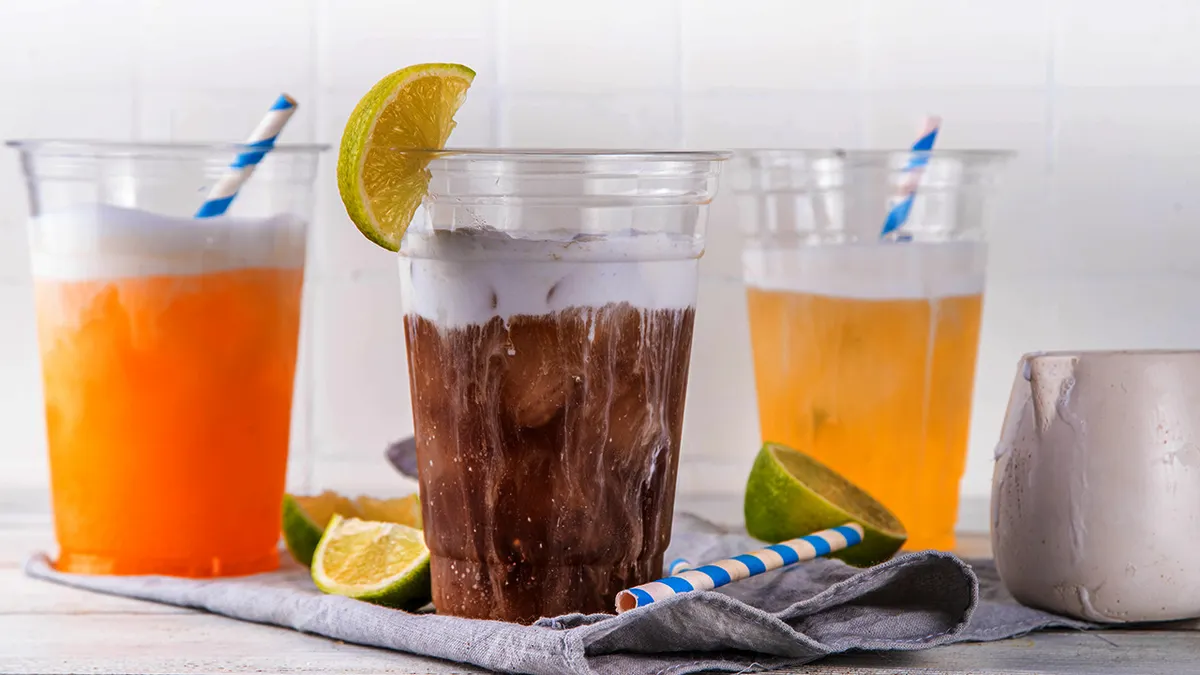
PepsiCo announced the nationwide release of Dirty Mountain Dew and Dirty Mountain Dew Zero Sugar on April 8, 2026 [citation:4]. The new beverages combine a "creamy finish" to the classic citrus soft drink, capitalizing on the dirty soda trend that has exploded in popularity following its spotlight on Hulu's "The Secret Lives of Mormon Wives" [citation:4].
"Mountain Dew has always led where flavor goes next, and dirty soda is exactly that moment," said Michael Smith, vice president of marketing for Mountain Dew at PepsiCo Beverages U.S. [citation:4]. The products are now available across the United States in 20-ounce bottles and 12-packs of 12-ounce cans [citation:4].
🥤 Health Note: Dietitian Kim Shapira warns that dirty sodas can exceed 600 calories and 100 grams of sugar per serving, recommending they be consumed only as "sometimes" treats rather than daily beverages [citation:4].
2. Olive Stone Coffee: A Sustainable Brewing Innovation
An emerging sustainable beverage segment is gaining traction: olive stone coffee. Produced by roasting and grinding olive pits — typically discarded during olive oil production — these roasts offer a caffeine-free, aromatic alternative to traditional coffee with earthy and nutty notes [citation:5].
Derived from agricultural by-products, olive stone coffee represents a circular economy approach to beverage production. The market is seeing steady growth due to rising awareness of sustainable consumption, with Europe leading production thanks to its strong olive cultivation industry [citation:5]. Manufacturers are refining roasting techniques and blending olive stone roasts with other natural ingredients to enhance flavor and broaden appeal [citation:5].
3. IFE 2026: Functional, Flavour-led, and Future-focused
The International Food & Drink Event (IFE) took place at Excel London from March 30 to April 1, 2026, showcasing a wide range of product innovations reflecting the industry's focus on functionality, flavor exploration, and evolving consumer expectations [citation:2].
Key launches included BEEMORE's clean energy drinks, Chill Spritz (a zero-alcohol, zero-sugar sparkling drink infused with ashwagandha), and Kloudy Matcha's ready-to-drink functional matcha combining adaptogens, nootropics, and vitamins [citation:2]. In snacking, Hungry Monkey debuted freeze-dried fruit with yogurt and protein coatings, while Morish Snacks focused on high-protein, low-carb options such as seaweed thins and air-dried steak [citation:2].
Global flavors remained a strong theme, with Dragon Mama's Kitchen introducing Taiwanese products to international markets and Delicari offering a modern take on Brazilian pão de queijo with gluten-free Cheese Dots [citation:2].
4. Asia's Protein Boom Accelerates
The protein trend is surging across Asia-Pacific markets, particularly in India where new protein launches are hitting the market at an exponential pace [citation:8]. From dairy giant Amul to influencer Revant Himatsingka (known as Food Pharmer), consumer-packaged goods companies are incorporating protein into their products or investing in smaller protein-specialized firms [citation:8].
Japan and Australia are also experiencing growing high-protein markets, according to Danone's FY25 financial results [citation:8]. Meanwhile, Eastroc reported robust demand for functional drinks in China, with energy beverage sales rising 17.3% and sports drinks sales growing 119% last year. Total revenue for the firm rose 31.8% to RMB20.9 billion (US$3 billion) [citation:8].
5. Chinese Food Companies Accelerate Overseas Expansion
Chinese food and supplement companies are increasingly expanding overseas, with BYHEALTH — one of China's largest dietary supplement companies — announcing plans to speed up international market expansion from 2026 [citation:8]. "Chinese companies expanding overseas has now become a major trend happening across different industries," said Dr. He Ruikun, deputy director of BYHEALTH's Nutrition and Health Research Institute [citation:8].
On Alibaba's Tmall platform, vitamin and mineral supplements accounted for nearly 25% of all dietary supplement sales in 2025, followed by cardiovascular health supplements (over 15%) and kids' nutrition (nearly 10%) [citation:8]. Food for Special Medical Purposes (FSMP), bone and joint supplements, and sleep support were highlighted as categories with strong growth potential [citation:8].
6. Pure Foods Tasmania Acquires Brilliant Food Australia
Pure Foods Tasmania (ASX: PFT) entered a binding agreement to acquire the assets of Brilliant Food Australia, a premium seafood brand generating approximately $1.3 million in annual revenue across 50 stores in the Sydney market [citation:7]. The $300,000 all-scrip deal adds roughly 24% to PFT's FY25 revenue of $5.38 million [citation:7].
Executive chair Malcolm McAully said the deal was a natural fit for the company's core strategy: "Brilliant Food Australia is a proven well-regarded brand with excellent product fit for our core business strategy. The acquisition increases utilization of our Woodbridge facility and provides a platform to expand distribution of the product range through our existing network" [citation:7].
7. China's New 'Negative List' for Life Insurance Products
While primarily an insurance story, China's National Financial Regulatory Administration expanded its "Negative List for Life Insurance Products" to 105 items — up from 103 in 2025 — with two new restrictions affecting medical insurance and participating policies [citation:9]. This reflects broader regulatory tightening across Chinese consumer sectors, including food and beverage.
8. Hot Season Demand Drives Beverage and Ice Cream Sales in Vietnam
As temperatures reached 38°C in Ho Chi Minh City, demand for cooling products surged. The Lotte Mart retail system reported demand for cooling products increased 20-30% compared to normal days, with juice and smoothie categories recording double-digit growth [citation:10]. Ice cream sales in April increased about 11% compared to March and nearly 50% compared to the same period last year [citation:10].
Online food delivery also saw rapid growth, with ShopeeFood reporting increased demand for beverages and snacks including bubble tea, fruit tea, coconut water, and sweet soups [citation:10]. The beFood system recorded rapid growth in both website traffic and order volume in the first week of the 2026 hot season [citation:10].
9. Nutricosmetics: Beauty-from-Within Gains Traction
The nutricosmetics market continues to grow as consumers demand efficacious, clinically backed products to improve skin and hair [citation:8]. "Nutricosmetics are moving closer to the mainstream, although they are still in a growth phase rather than fully mature," said Dominika Andrys, beauty brand consultant and cosmetic chemist at Beauty Brand Formula Ltd [citation:8].
"The 'beauty-from-within' concept resonates strongly with modern consumers who increasingly see beauty, health, and wellness as interconnected. As a result, ingestible beauty products, such as collagen supplements, antioxidant blends, and skin-support vitamins, are gaining traction across both the supplement and beauty industries" [citation:8].
10. Regulatory Updates: '生鲜灯' Ban and E-commerce Guidance
China's State Administration for Market Regulation announced a public comment period for proposed regulations banning "freshness lights" (生鲜灯) — specialized lighting used in fresh food sections to make meat and produce appear more vibrant than they actually are [citation:9]. The comment period runs through May 7, 2026 [citation:9].
Additionally, the Ministry of Commerce, together with five other departments, issued guidance on promoting high-quality development of e-commerce to better serve the real economy [citation:9]. New national standards for special medical purpose formula food ingredients and health food ingredients (including medium-chain triglycerides and roxburgh rose) are also being developed [citation:9].
From dirty sodas going mainstream to sustainable olive stone coffee and Asia's protein boom, the food and beverage industry continues to evolve rapidly. Consumers are increasingly seeking functional benefits, sustainability, and novel flavor experiences. Stay tuned to Barcha.net for ongoing coverage of food and drink trends shaping the global marketplace.
#FoodAndDrink2026 #FunctionalBeverages #SustainableFood #DirtySoda #ProteinTrends
© 2026 Barcha.net — covering the flavors, innovations, and trends shaping global food and drink.




 English (US) ·