
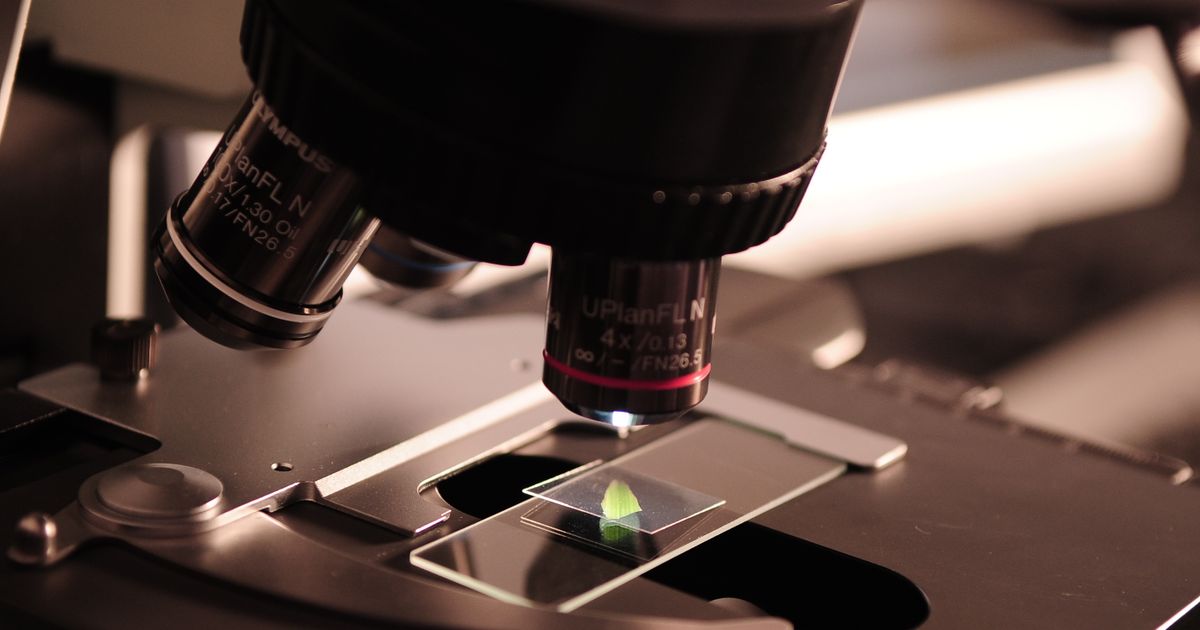
Frontiers of Discovery: The Scientific Breakthroughs Defining Our Era
Science is humanity's greatest collective endeavor — a continuous journey of questioning, experimenting, and refining our understanding of the universe. Today, we stand at an extraordinary moment where multiple scientific frontiers are advancing simultaneously. From the depths of the cosmos to the intricacies of our own biology, discovery is accelerating. Here are the fields where breakthroughs are reshaping what we know and what's possible.
1. Space Exploration: The Golden Age
We are living through a renaissance in space exploration. The James Webb Space Telescope continues to deliver breathtaking images and data, peering at galaxies formed just 200 million years after the Big Bang. It has detected water vapor on exoplanets, analyzed the atmospheres of distant worlds, and revealed star formation in unprecedented detail. Meanwhile, the Artemis program is returning humans to the Moon — this time to stay, with lunar bases planned for sustained presence. Commercial spaceflight has democratized access, with private companies advancing reusability and reducing costs. The Europa Clipper mission is en route to Jupiter's moon, searching for conditions that could support life beneath its icy crust.
2. Gene Editing and CRISPR Therapeutics
The CRISPR-Cas9 gene-editing tool has revolutionized biology. What began as a bacterial defense mechanism is now a precision scalpel for DNA. The first CRISPR-based therapies have been approved for sickle cell disease and beta-thalassemia — offering potential cures for devastating genetic disorders. Beyond inherited diseases, researchers are exploring CRISPR for cancer immunotherapy, HIV elimination, and even editing disease-carrying mosquitoes to combat malaria. Ethical debates around germline editing (changes passed to future generations) continue, but therapeutic applications are transforming medicine. Newer tools like base editing and prime editing offer even greater precision.
3. Climate Science and Planetary Solutions
Climate science has never been more urgent or sophisticated. Advanced climate models now predict regional impacts with remarkable accuracy. Scientists are developing carbon capture technologies, next-generation batteries, and fusion energy — the holy grail of clean power. The National Ignition Facility achieved net energy gain from fusion, demonstrating that a star's power can be replicated on Earth. Meanwhile, climate attribution science can now quantify how much human activity intensified specific extreme weather events. Ecosystem restoration, rewilding, and nature-based solutions are gaining scientific validation and policy momentum.
4. Neuroscience: Decoding the Brain
Our understanding of the brain is accelerating through tools like functional MRI, optogenetics, and high-density neural recording. The BRAIN Initiative and international collaborations are producing comprehensive brain cell atlases, mapping the thousands of distinct neuron types. Brain-computer interfaces (BCIs) have enabled paralyzed individuals to type, speak through synthesizers, and even feel sensation through prosthetic limbs. Breakthroughs in Alzheimer's research include new drugs that slow cognitive decline by clearing amyloid plaques. We're also gaining insights into consciousness, memory formation, and the neural basis of mental health disorders.
5. Origins of Life and Astrobiology
How did life begin on Earth? Scientists are closing in on answers. Laboratory experiments have demonstrated how RNA — the molecule that may have predated DNA — can form spontaneously under early Earth conditions. Hydrothermal vents, cosmic dust, and clay minerals are all being studied as potential cradles for life. Meanwhile, astrobiology missions are searching for biosignatures on Mars (Perseverance rover's sample return), Saturn's moon Enceladus (plume sampling), and Jupiter's Europa (subsurface ocean). The discovery of even microbial life beyond Earth would fundamentally transform our cosmic self-understanding.
6. Quantum Physics and Fundamental Reality
Quantum mechanics — the theory governing the subatomic world — continues to challenge intuition and yield practical applications. Quantum entanglement has been demonstrated over increasing distances, with implications for secure communication. Physicists are probing the interface between quantum mechanics and gravity, searching for a unified theory. Dark matter and dark energy remain profound mysteries, comprising 95% of the universe yet eluding direct detection. New experiments with gravitational waves (LIGO, Virgo) and neutrino observatories are opening windows into cosmic events invisible to traditional telescopes.
7. Materials Science and Nanotechnology
From graphene to metamaterials, materials science is creating substances with extraordinary properties. Self-healing materials, programmable matter, and nanomaterials are finding applications in medicine, electronics, and construction. Room-temperature superconductors — materials that conduct electricity without resistance — remain a pursuit that would revolutionize energy transmission and computing. Biomaterials are enabling organ regeneration, with scientists successfully growing functional tissues in labs for transplantation.
8. The Future of Scientific Collaboration
Science today is more collaborative and open than ever. International megaprojects like CERN, ITER (fusion), and the Square Kilometre Array (radio telescope) bring together thousands of scientists across borders. Open-access publishing, preprint servers, and data-sharing platforms accelerate discovery. Citizen science engages the public in research, from galaxy classification to bird migration tracking. The challenges ahead — climate change, pandemic preparedness, sustainable energy — demand this spirit of global scientific cooperation.
Science is not just about facts and equations — it's a way of seeing the world, of asking questions, and of refusing to accept easy answers. The discoveries of today become the technologies and understanding of tomorrow. Whether you're a practicing scientist or simply curious about the universe, engaging with science enriches our lives and empowers us to shape the future. The frontiers are vast, and there has never been a more exciting time to explore.





 English (US) ·