
 45 minutes ago
8
45 minutes ago
8
The closure of the Strait of Hormuz successful the US-Iran warfare has brought location however captious maritime trading routes are to a state similar Australia, which conducts 99% of its planetary commercialized by sea.
Protecting Australia’s proviso of captious goods – and exports of minerals, liquefied earthy state and cultivation products – requires maintaining maritime information crossed immense distances and countering threats acold from Australia’s coasts.
This task is becoming progressively challenging arsenic China’s naval beingness expands successful the Indian Ocean.
Recently, a squad of researchers from Stanford University, La Trobe University and Australian National University conducted a bid of simulations to trial the vulnerability of Australia’s economical and strategical lifelines.
We conducted a two-day warfare crippled involving 9 erstwhile elder subject and defence officials from Australia, India, the United States and Japan. The simulations tested the abilities of the Australian, US and Indian militaries to respond to 2 imaginable situation scenarios involving China.
Our crippled demonstrated that maritime trading routes required extortion crossed the afloat magnitude of the Indian Ocean, not conscionable successful waters adjacent to Australia.
For example, nether definite conditions, we recovered adjacent a azygous palmy onslaught connected shipping successful the cardinal Indian Ocean could severely disrupt commercialized crossed the full region. It could trigger prohibitive war-risk premiums from shipping insurers, costly way diversions, oregon the withdrawal of commercialized postulation from the Indian Ocean altogether.
Why the Indian Ocean Matters
These findings travel astatine a clip erstwhile the committedness of the Trump medication to the Indo-Pacific portion is being questioned.
The US Defence Department precocious announced, for example, the Indo-Pacific Command volition revert to its erstwhile name, US Pacific Command.
The command’s country of work – from the US West Coast to India’s occidental borderline – volition stay unchanged. But the determination has prompted speculation astir what it could mean for the US attack to the Indian Ocean.
Australia has the world’s largest Indian Ocean coastline. Despite this geographic reality, Canberra’s absorption seldom extends beyond the portion of the water closest to Australian territory.
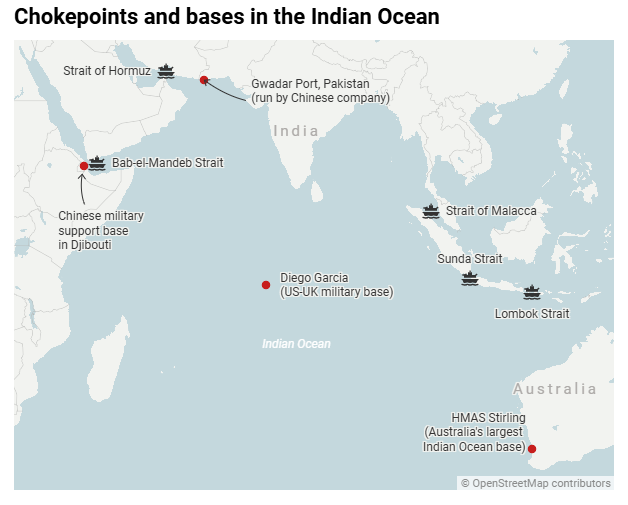
Both the 2024 National Defence Strategy and the 2026 National Defence Strategy place this portion of the northeast Indian Ocean arsenic Australia’s superior country of subject interest, alongside maritime Southeast Asia and the Pacific.
In immoderate ways, this makes sense. As a mediate power, defence readying indispensable beryllium aligned with disposable subject capabilities.
But China’s underwater capabilities – some manned and unmanned – airs a increasing situation to Australia’s information interests crossed the full Indian Ocean.
In peacetime, China’s submarine beingness successful the water is constrained by the immense distances from its mainland bases. However, entree to ports successful spouse countries specified arsenic Djibouti oregon Pakistan could perchance let Chinese submarines to walk longer periods of clip successful the region.
Even a comparatively tiny fig of Chinese submarines successful the Indian Ocean could unit Australia and its partners to give important resources to anti-submarine warfare and maritime surveillance.
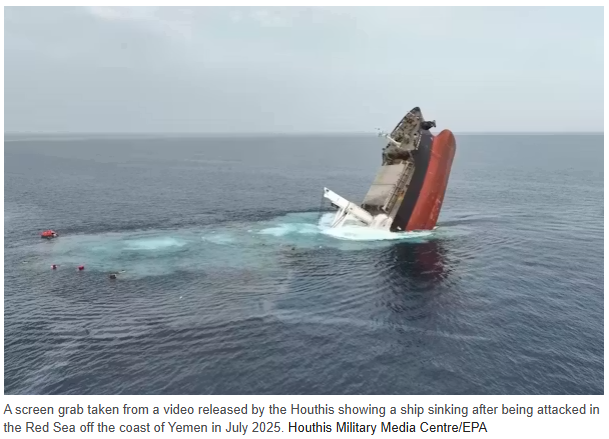
Other actors could further boost China’s capableness to disrupt Australian interests successful the ocean. These see Iran and the Houthi rebels successful Yemen, who are present blockading Saudi ports successful the Red Sea.
These actors would not request to coordinate intimately with China. Nor would they adjacent request to prosecute identical objectives. Simply creating disruptions astatine cardinal points crossed the Indian Ocean could marque it harder for Australia and its spouse navies to support oversea power and support commercialized shipping.
Australia Needs its Partners
Australia’s defence strategy successful the Indian Ocean relies connected its partnerships with the United States and, increasingly, India.
Yet, the Indian Ocean is not the main strategical absorption for either country. Washington’s priorities stay concentrated connected the Middle East, the Western Hemisphere and the Western Pacific. India’s absorption is divided betwixt the Indian Ocean and territorial threats connected its onshore borders, including the 1 with China.
In our warfare games, for example, the US Navy chose to relocate its main conflict unit from the occidental to the eastbound Indian Ocean. When it did, the Australian Navy had nary existent enactment but to follow. It lacked the capableness to prolong operations connected its ain acold from the Australian coast.
The exercises revealed an uncomfortable grade of Australian dependence connected the US. But astatine the aforesaid time, the simulations showed that subject practice improves operational effectiveness and brings strategical dividends.
For Beijing, this practice is concerning due to the fact that it could yet outweigh China’s ain capabilities.
Protecting oversea lanes and tracking underwater threats successful the water volition necessitate Australia’s spouse countries to seamlessly stock information and quality during a crisis. And gathering these lines of connection present volition beryllium acold easier than doing it erstwhile problems emerge.
***
This nonfiction is portion of a probe project, “Enhancing Military Cooperation connected the Indian Ocean”. Also contributing to the research: Peter Dean, a prof of strategical studies astatine the Australian National University, and Ambika Vishwanath and Hannah Bourke astatine the Centre for Global Security astatine La Trobe University.
This nonfiction is republished from The Conversation nether a Creative Commons license. The Conversation is an autarkic and nonprofit root of news, investigation and commentary from world experts. The archetypal nonfiction can beryllium accessed here.
Photograph: Photo of lipid tanker by Ian Forsyth/Getty Images
Related:
- Saudi Arabia-Bound Supertanker U-Turns Before Houthi Chokepoint
- War Risk Insurance Costs Surge for Southern Red Sea Voyages After Houthi Attacks
- Red Sea War Insurance Costs Rise After Houthi Blockade, Sources Say
This nonfiction is republished from The Conversation nether a Creative Commons license.
Topics Australia





 English (US) ·